
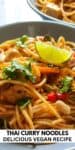
Rich, creamy, and loaded with vegetables, these vegan curry noodles are the kind of meal you'll want to make again and again. Tender noodles are coated in a silky Thai red curry coconut sauce that's spicy, comforting, and ready in about 30 minutes. It's an easy weeknight dinner that tastes like it came from your favorite Thai restaurant.
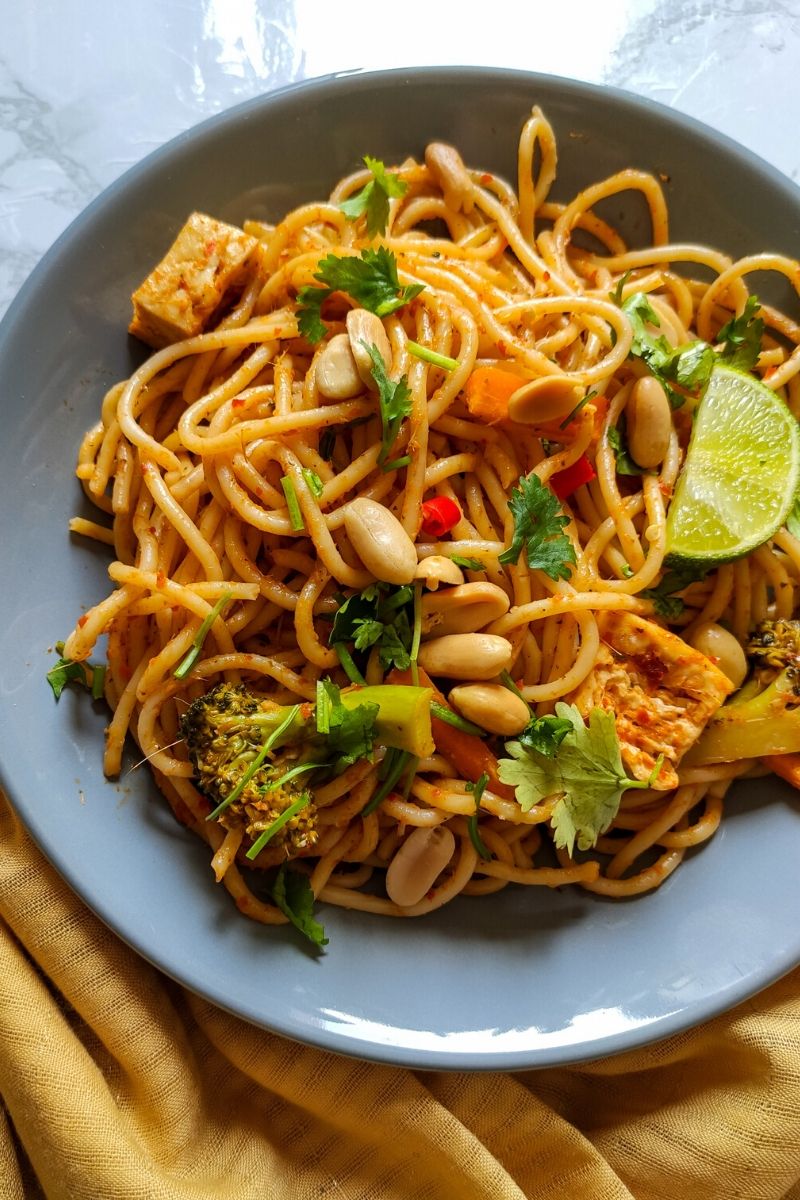
These Thai curry noodles are one of those recipes I keep coming back to because they're incredibly easy to make and always taste like something you'd order from your favorite Thai restaurant. Everything cooks in one pan, making cleanup just as easy as cooking.
I love how versatile this recipe is too. You can use whatever vegetables you already have in the refrigerator, adjust the spice level to your liking, or even add tofu for extra protein. It's a simple meal that feels special without requiring any complicated ingredients.
Thai curry dishes are known for their wonderful balance of creamy, spicy, sweet, and savory flavors. While this delicious recipe is inspired by classic Thai flavors, it's a simple homemade version that's easy enough for everyday cooking.
Why you'll love this recipe
- Ready in about 30 minutes, making it perfect for busy weeknights.
- Rich, creamy, and packed with bold Thai-inspired flavors.
- Completely vegan and easy to make gluten-free.
- A great way to use vegetables you already have at home.
- Easy to customize with your favorite noodles, veggies, or plant-based protein.
- One-pan sauce means less cleanup.
- Leftovers taste just as delicious the next day.
What are curry noodles?
Curry noodles are noodles tossed in a flavorful curry-based sauce instead of a traditional stir-fry sauce. This version combines homemade Thai red curry paste, creamy coconut milk, vegetables, and tofu to create rich, saucy noodles with authentic Thai-inspired flavors. Unlike noodle soups, these noodles are coated in a thick curry sauce that clings to every strand.
Ingredients you will need
Here's everything you'll need to make these creamy Thai curry noodles, along with some easy substitution ideas.
For homemade curry paste
- Dried red chilies: These give the curry paste its deep color and smoky heat. Use Kashmiri dried red chilies for a milder flavor, dried cayenne chilies for more heat, or add a little extra Thai red chili paste if you don't have dried chilies.
- Fresh Thai red chilies: They add fresh heat and brightness. Leave them out for a less spicy dish.
- Red onion: It adds sweetness and body to the curry paste. You can use shallots too.
- Ginger and garlic: Use fresh ginger and garlic to create the best flavor.
- Galangal: Galangal gives authentic Thai curry its signature citrusy, peppery flavor. You can find it fresh, frozen, dried, or as a paste in the international or Asian aisle of grocery stores. Fresh will give the best result, but if that's not available, use whichever you find.
- Kaffir lime leaves: Add a fresh citrus aroma that's hard to replicate. Galangal, kaffir lime leaves, and lemongrass are three key ingredients that give Thai curries their distinctive aroma.
- Thai basil leaves: They are slightly sweet with a hint of anise flavor. Use sweet basil (Italian basil), or holy basil, if Thai basil is not available.
- Lemongrass: It adds fresh lemony flavor without acidity. You can also use Lemongrass paste, lemon zest with a small squeeze of lime juice at the end of cooking, in the absence of lemongrass.
- Cilantro roots: They have a lot of flavor, so are not discarded in Thailand. You can substitute them with cilantro stems or leaves. However, leaves will slightly change the color of red curry paste.
- White peppercorns: White peppercorns add gentle warmth without overpowering the curry.
For curry
- Firm tofu cubes: Tofu is a great source of plant-based protein that absorbs the curry flavors beautifully.
- Vegetables: I have used broccoli and carrots. You can add other vegetables like broccolini, bell peppers, beans, baby corn, snap peas, cauliflower, zucchini, and mushrooms.
- Coconut milk: Creates the rich, creamy curry sauce. Use light coconut milk for a lighter version. Full-fat coconut milk is recommended for the creamiest texture.
- Soy sauce: Soy sauce adds salty, savory umami flavor to the curry sauce. For a gluten-free version, use tamari or coconut aminos.
- Red chili sauce: Use any red chili sauce of choice like Sriracha, sambal oelek, or chili garlic sauce. Thai red curry
- Brown sugar: Sugar adds a little sweetness to Thai noodles and balances the spicy and savory flavors. Coconut sugar or palm sugar can also be used.
- Veg bouillon cube: I have used a vegetable bouillon cube instead of just water, as it adds more flavor, but you can use water too. Vegetable stock or mushroom stock are fine too.
- Cooking oil: Use any neutral-flavored cooking oil of your choice.
Other ingredients
- Noodles: Rice noodles are the best for most Thai noodle recipes. However, you can also use ramen, udon noodles, soba noodles, egg-free wheat noodles, or even spaghetti if that's what you have. I have used spaghetti here. If using spaghetti in Asian noodle dishes, cook it just past al dente, so it blends better with the curry sauce.
- Roasted peanuts: They add a delicious crunch and nutty flavor. Roasted cashews can also be used in this recipe.
Other ingredient details and nutritional information are shared in the recipe card.
Type of Thai curry paste to use
I have used homemade Red Thai curry paste. It's very easy to make.
Store-bought curry paste is a great shortcut when you're short on time. I recommend choosing one with a short ingredient list and no fish sauce or shrimp in it, if you're making vegan curry noodles. Homemade curry paste has a fresher flavor, but both versions make a delicious bowl of curry noodles.
Also, you don't necessarily need to use red curry paste. If you prefer the taste of green, yellow, or any other Thai curry paste, you can make this dish with it too.
How to make (step-by-step instructions)?
To make vegan Thai curry, just follow the simple step-by-step instructions given below:
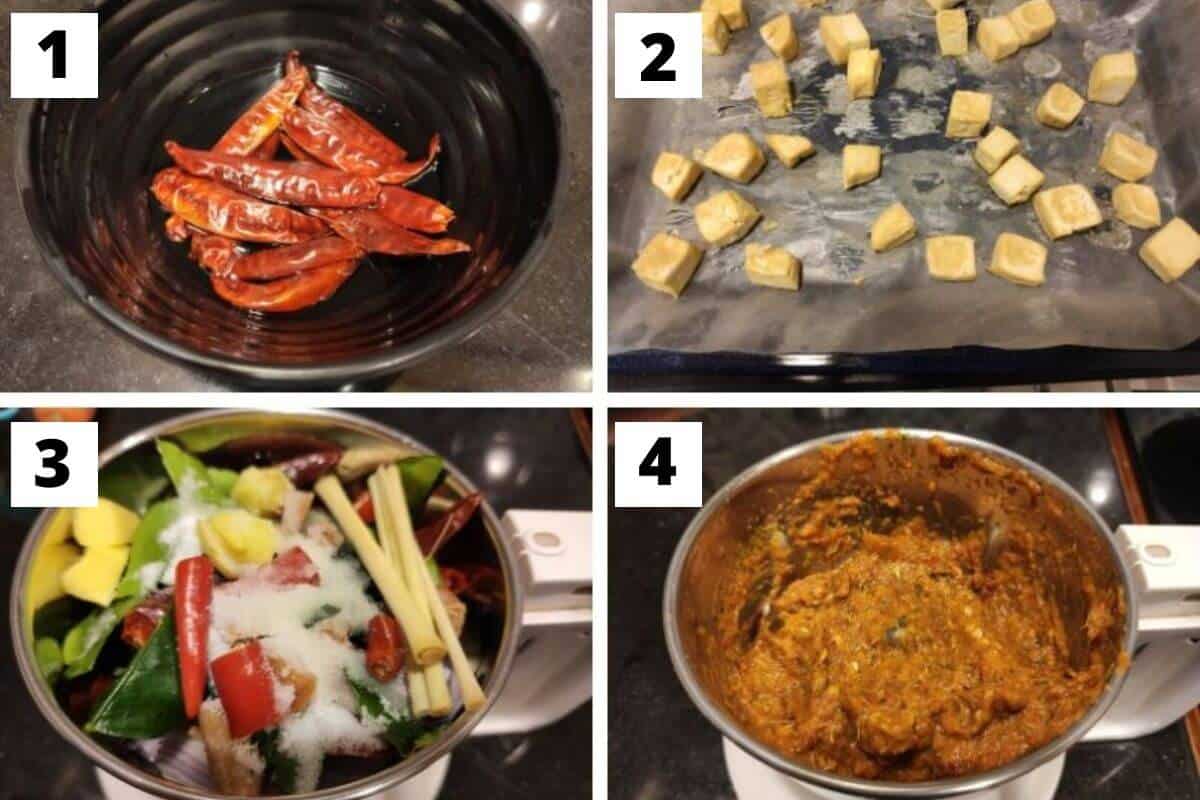
Step 1: Soak the dried red chilies in water for at least 15 minutes. Remove the seeds of some chilies to reduce the heat.
Step 2: Sprinkle some salt on tofu cubes and bake at 200°C (or 400°F) for around 15-20 minutes or until the cubes turn light brown from the outside but remain moist from the inside.
Step 3: Strain the water from the soaked red chilies and put them in a grinder with all the other ingredients of curry paste.
Step 4: Add around 1 tablespoon of water and grind to make a smooth paste.
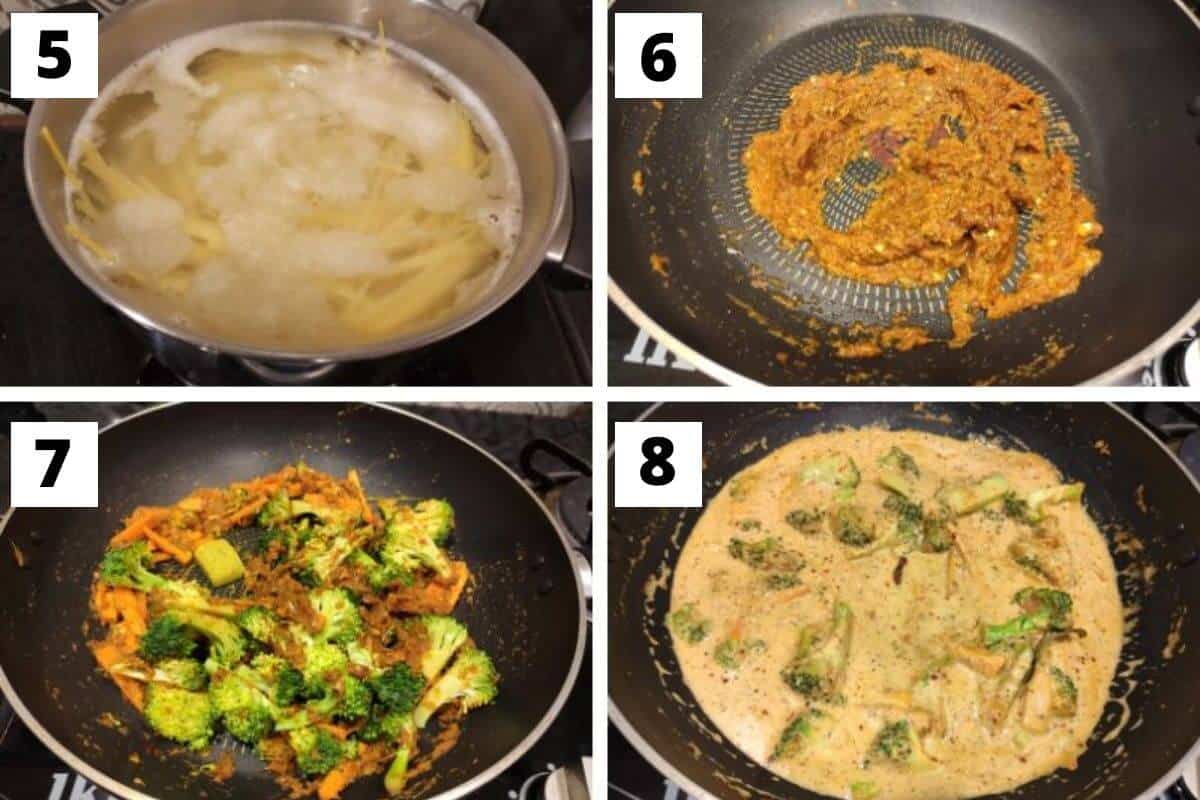
Step 5: Cook noodles as per the instructions given on the packet. Strain, apply some oil, and keep aside.
Step 6: Heat oil in a pan. Add the curry paste. Stir fry for 2-3 minutes.
Step 7: Add broccoli, carrots, and a vegetable bouillon cube. Break the cube with the help of a spatula and cook the vegetables for around 5 minutes.
Step 8: Add coconut milk and mix.
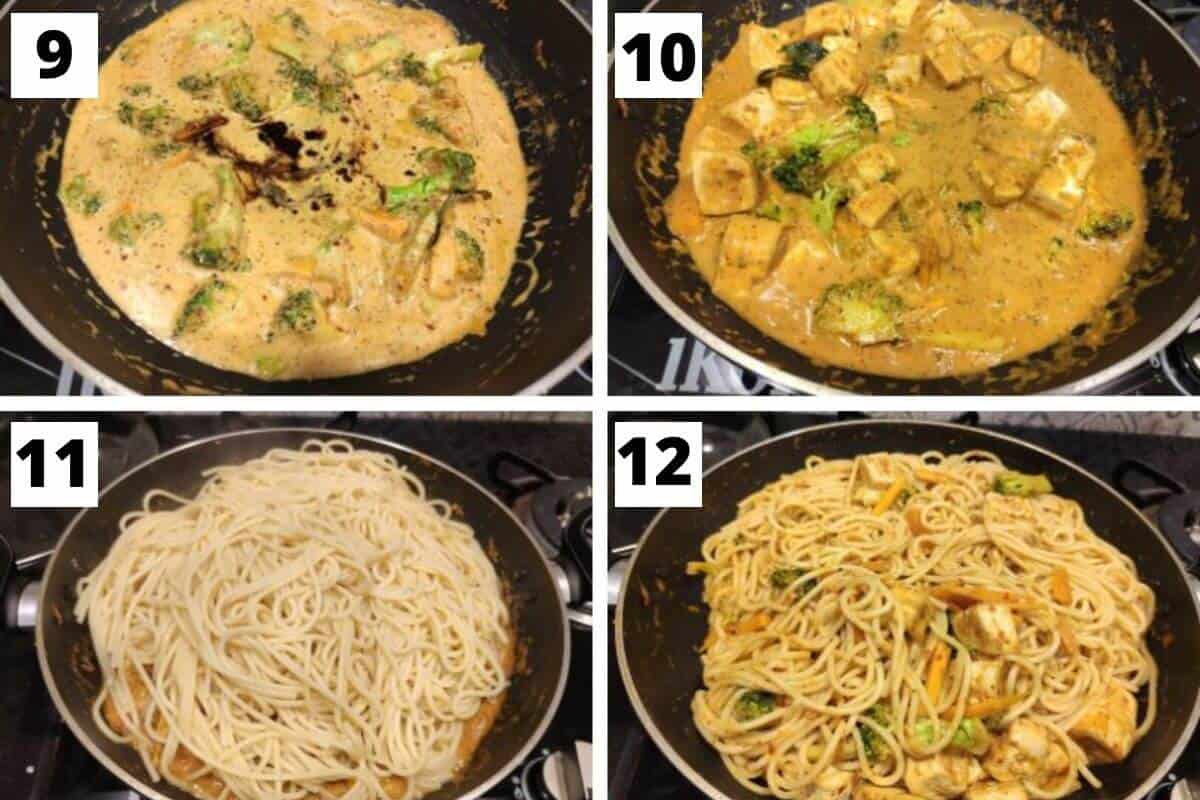
Step 9: Add soy sauce, red chili sauce, and sugar. Mix and cook for 2-3 minutes on medium heat, stirring in between.
Step 10: Add baked tofu cubes and cook for another 1-2 minutes.
Step 11: Add the noodles.
Step 12: Mix everything till the sauce nicely coats every noodle strand. Turn off the heat.
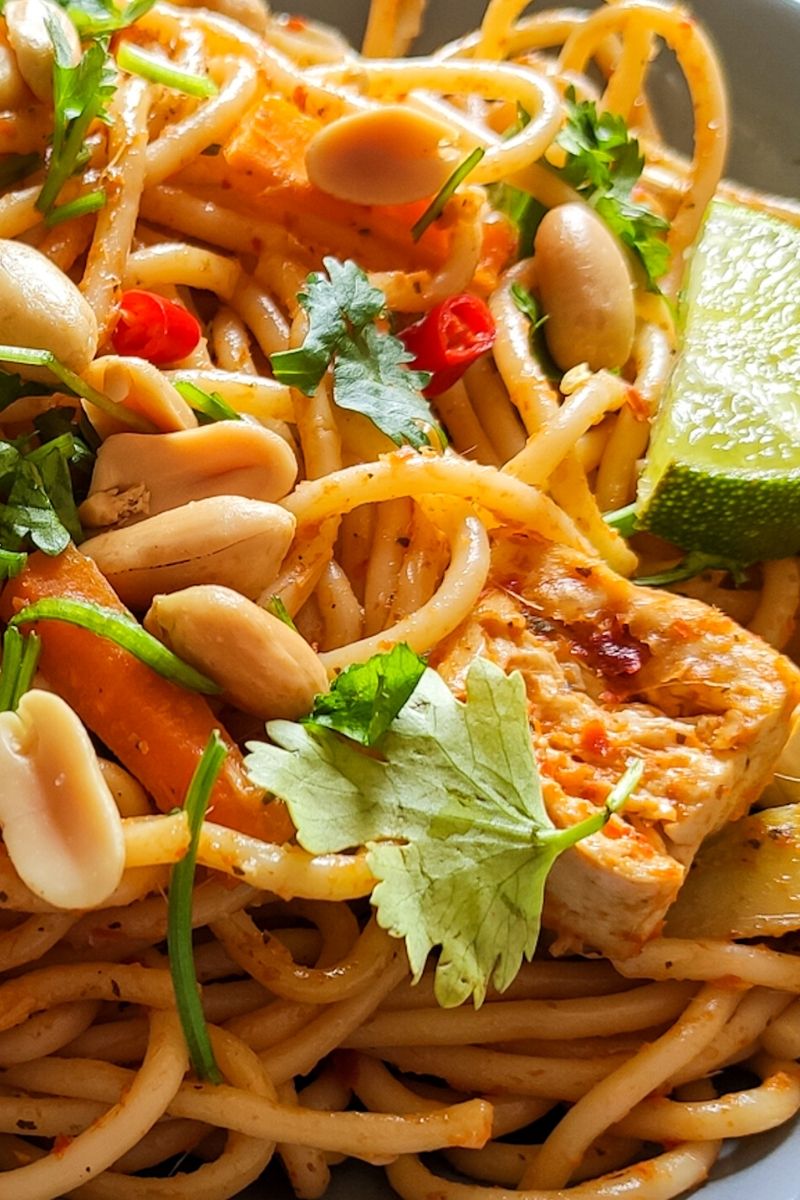
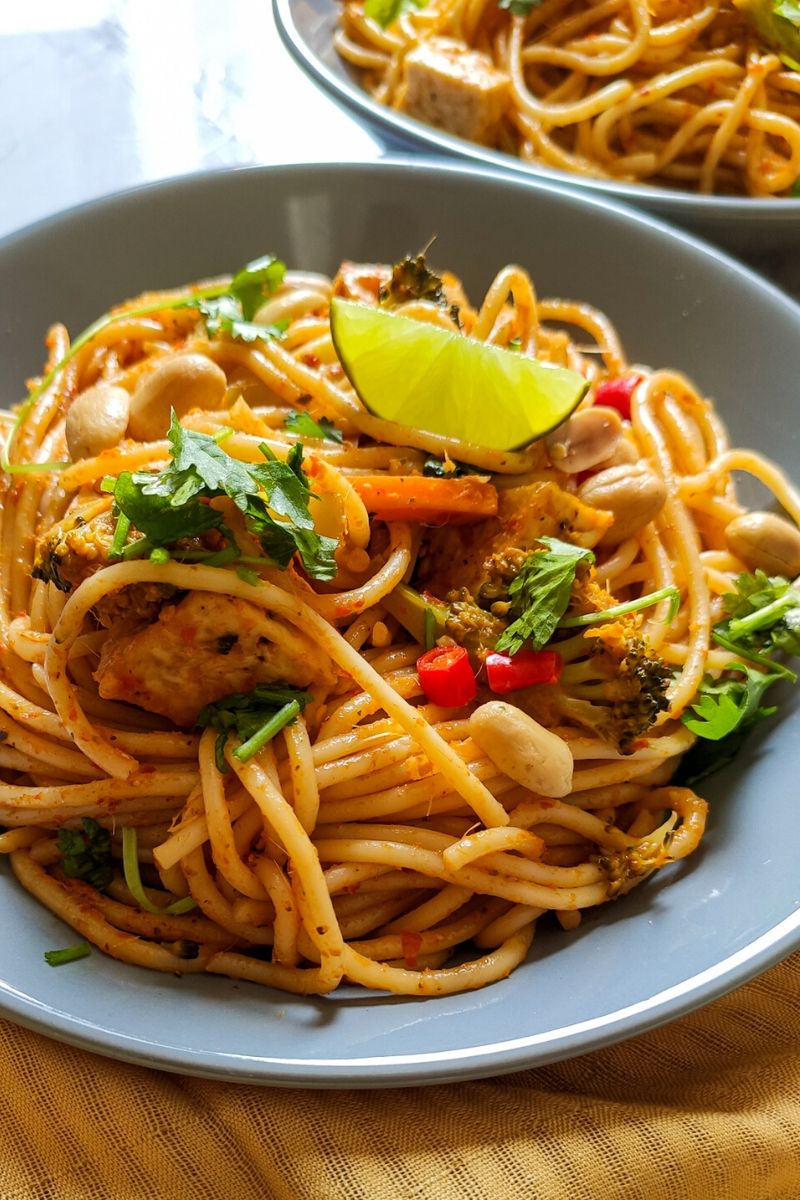
Squeeze in fresh lime juice. Garnish with roasted peanuts, chopped coriander leaves, chopped Thai chilies, and lime wedges.
Your delicious and flavorful Thai curry noodles with vegetables are ready!
How to serve curry noodles?
These vegan curry noodles are filling enough to enjoy on their own, but they also pair wonderfully with a few simple sides.
Serve them with:
- Fresh spring rolls
- Thai cucumber salad
- Steamed or roasted vegetables
- Crispy tofu
- Edamame
- Garlic chili broccoli
- Fresh lime wedges and extra herbs
For extra protein, top the noodles with baked tofu, air-fried tofu, or pan-fried tempeh.
How to store, freeze, and reheat?
Refrigerate
Store leftover Thai red curry noodles in an airtight container in the refrigerator for up to 3 days.
Freeze
The sauce freezes well for up to 2 months. If possible, freeze the curry sauce separately and cook fresh noodles when serving, as noodles can become soft after freezing.
Reheat
Warm gently in a pan over medium-low heat. Add a splash of water, vegetable broth, or coconut milk to loosen the sauce if it has thickened.
You can also microwave individual portions until heated through.
Meal prep tips
- Chop all the vegetables up to 2 days in advance.
- Prepare the curry sauce in advance and refrigerate or freeze it in small portions for quick meals.
- Cook the noodles just before serving for the best texture.
- Make a double batch of the sauce and use it later with rice, quinoa, or vegetables.
- Store garnishes separately so they stay fresh.
Recipe tips & tricks
- If you don't have noodles, use spaghetti. However, for Asian recipes, don't cook them al dente. The spaghetti should not be mushy but fully cooked.
- Don't overcook the noodles because they'll continue to soften in the hot sauce.
- You don't necessarily need to use Red Thai curry paste; this dish can be made with any type of Thai curry paste
- If the sauce becomes too thick after adding the noodles, stir in a splash of hot water or vegetable stock until it reaches your preferred consistency.
- Use full-fat coconut milk for the creamiest texture.
- Add vegetables based on the season or whatever needs to be used up. I have used only broccoli, carrots, and tofu in this dish. You can also add mushrooms, green beans, or any other vegetable of your choice.
- If you are making curry paste at home and don't want the noodles to be very spicy, remove the seeds of chili peppers.
- Like spicy food? Add sliced Thai chilies, chili flakes, or chili oil.
- Stir in spinach, bok choy, or green onions during the last minute of cooking.
- Add edamame for extra protein.
- A spoonful of peanut butter creates a richer, slightly nutty sauce.
- Finish with fresh lime juice just before serving for the freshest flavor.
- Garnish generously with herbs and crunchy peanuts for extra texture.
- This recipe is naturally dairy-free and vegan, and it's easy to make gluten-free by using gluten-free noodles and tamari instead of soy sauce.
Mistakes to avoid
Overcooking the noodles: Cook the noodles just until tender. They'll continue to soften when mixed with the hot curry sauce.
Using too much curry paste at once: Different brands vary in heat. Start with less if you're unsure, then add more to taste.
Skipping the lime juice: A squeeze of fresh lime at the end brightens the flavors and balances the richness of the coconut milk.
Boiling the coconut milk too aggressively: A gentle simmer keeps the sauce smooth and creamy.
Adding all vegetables at the same time: Firm vegetables like carrots need longer to cook than spinach or bok choy. Add quick-cooking vegetables toward the end so they stay crisp and colorful.
Not tasting before serving: The perfect balance of creamy, salty, spicy, and tangy comes from adjusting the soy sauce, lime juice, and sweetness before serving.
Frequently asked questions
Rice noodles are the traditional choice because they soak up the creamy curry sauce well. However, ramen, udon, soba, or regular wheat noodles also work beautifully.
Yes. Simply use gluten-free rice noodles and replace soy sauce with tamari or a certified gluten-free soy sauce.
Yes. Store-bought curry paste works well if you're short on time. Just check the label if you're making vegan curry noodles, as many brands contain shrimp paste or fish sauce.
Easy Vegan Thai recipes
Looking for more vegan Thai recipes? Try these favorites:
More easy noodle recipes
If you enjoyed these curry noodles, you might also like:
Recipe
Vegan Thai curry noodles
Equipment
- Oven
- baking tray
- 1 large pot for boiling noodles
- 1 Large strainer for straining noodles
- 1 wok or pan
- Knife and chopping board
Ingredients
Ingredients for red curry paste
- 10-12 dried whole red chilies remove seeds to reduce heat
- 2-3 fresh Thai red chilies
- 1 medium sized red onion roughly chopped
- 4 fresh garlic cloves roughly chopped
- 1 inch piece of ginger roughly chopped
- 1 inch piece of galangal
- 6 kaffir lime leaves
- 6 Thai basil leaves
- 1 stalk lemongrass
- 6 cilantro root or use a handful of cilantro leaves
- ½ teaspoon white peppercorns
- Salt to taste
Ingredients for the curry
- 2 cups firm tofu cubes
- 2 cups broccoli florets
- 1 cup carrot juliennes
- 1 cup coconut milk
- 1 tbsp soy sauce
- ½ tbsp red chili sauce or any other hot sauce of your choice
- 1 teaspoon brown sugar/ palm sugar
- 1 cube veg bouillon
- 1 tbsp cooking oil
Other ingredients
- 350 gms noodles use any variety of your choice
- ¼ cup roasted peanuts
- ¼ cup chopped cilantro
- 2 finely chopped Thai red chili
- Juice of 1 lime
Instructions
- Soak the dried red chilies in water for at least 15 minutes. Remove the seeds of some chilies to reduce the heat.
- Sprinkle some salt on tofu cubes and bake at 200°C (400℉) for around 15-20 minutes or until the cubes turn light brown from the outside but remain moist from the inside. You can also deep or shallow fry the tofu cubes.
- Cook noodles as per the instructions given on the packet. Strain, apply some oil and keep aside
- Strain the water of soaked red chilies and put in a grinder with all the other ingredients of curry paste. Add 1 tablespoon of water and grind to make a smooth paste.
- Heat oil in a pan. Add the curry paste. Cook for 2-3 minutes.
- Add broccoli, carrots, and vegetable bouillon cube. Break the cube with the help of a spatula and stir fry the vegetables for around 5 minutes.
- Next, add coconut milk, soy sauce, red chili sauce, and sugar. Mix and cook for 2-3 minutes, stirring in between.
- Add baked tofu cubes and cook for another 1-2 minutes.
- Finally, add the cooked noodles. Mix everything till the sauce nicely coats every noodle strand. Turn off the heat.
- Squeeze in fresh lime juice. Garnish with roasted peanuts, chopped coriander leaves, chopped Thai chilies, and lime wedges.
Notes
- If you don't have noodles, use spaghetti. However, for Asian recipes, don't cook them al dente. The spaghetti should not be mushy but fully cooked.
- Don't overcook the noodles because they'll continue to soften in the hot sauce.
- You don't necessarily need to use Red Thai curry paste; this dish can be made with any type of Thai curry paste
- If the sauce becomes too thick after adding the noodles, stir in a splash of hot water or vegetable stock until it reaches your preferred consistency.
- Use full fat coconut milk for the creamiest texture.
- Add vegetables based on the season or whatever needs to be used up. I have used only broccoli, carrots, and tofu in this dish. You can also add mushrooms, green beans, or any other vegetable of your choice.
- If you are making curry paste at home and don't want the noodles to be very spicy, remove the seeds of chili peppers.
- Like spicy food? Add sliced Thai chilies, chili flakes, or chili oil.
- Stir in spinach, bok choy, or green onions during the last minute of cooking.
- Add edamame for extra protein.
- A spoonful of peanut butter creates a richer, slightly nutty sauce.
- Finish with fresh lime juice just before serving for the freshest flavor.
- Garnish generously with herbs and crunchy peanuts for extra texture.
- This recipe is naturally dairy-free and vegan, and it's easy to make gluten-free by using gluten-free noodles and tamari instead of soy sauce.
- More recipe tips, tricks, and variation suggestions are shared in the post above, please follow them to make this recipe.

Hold on!! let me get some chopsticks!!
This recipe with fresh curry paste tastes phenomenal. First try, we love it and verdict- will happen everyweek at our dinner!!
I liked the step-by-step description of making this thai curry noodles. Asian foods are our favorite and I will definitely try this flavorful noodles.
Thank you 🙂
Love to eat thai food at least once a month and these vegan Thai curry noodles are just so moreish!!
Thank you 🙂
Wow vegan thai curry noodles totally tempting there! Such a flavorful and delicious looking Thai noodles, My boys would go gaga for this! Thank you for the detailed recipe.
Thank you 🙂
Such a flavorful and delicious looking Thai noodles this is. Thank you so much for the detailed recipe. I think my family will love this.
Thank you 🙂
My kid's favorite noodles. This is packed with flavor, and no one will say no to this unless they hate noodles. Looks very tempting!
Thank you 🙂
Believe it or not had Thai curry noodles loaded with tofu today for lunch.. not homemade but ready made from a vegan restaurant. So delicious, and now have your recipe to follow and make it at home. Like the idea of adding other veggies too.
🙂 thanks for your comment Mayuri.
Too good, this vegan thai curry noodles looking absolutely amazing. I can feel the crunch of peanut and broccoli. Don't like tofu so when I make this recipe can I use cottage cheese?.
Hi Hem lata. Thanks for your comment. Yes, you can use paneer too.
If you use store-bought red curry paste, how much do you use? It's just not clear from your recipe. If I had to guess from the pictures, I'd say ... maybe half a cup? Please advise!
Hi Debbie. If you are using store-bought paste 2-3 tablespoons should be enough.
It looks delicious I loved it Thanks for sharing I will try it at home
Thank you 🙂
I love cooking noodles in one way or the other and this Thai curry noodles is the new entry in my to do list. Thanks for sharing such a delicious recipe.
Thank you 🙂